
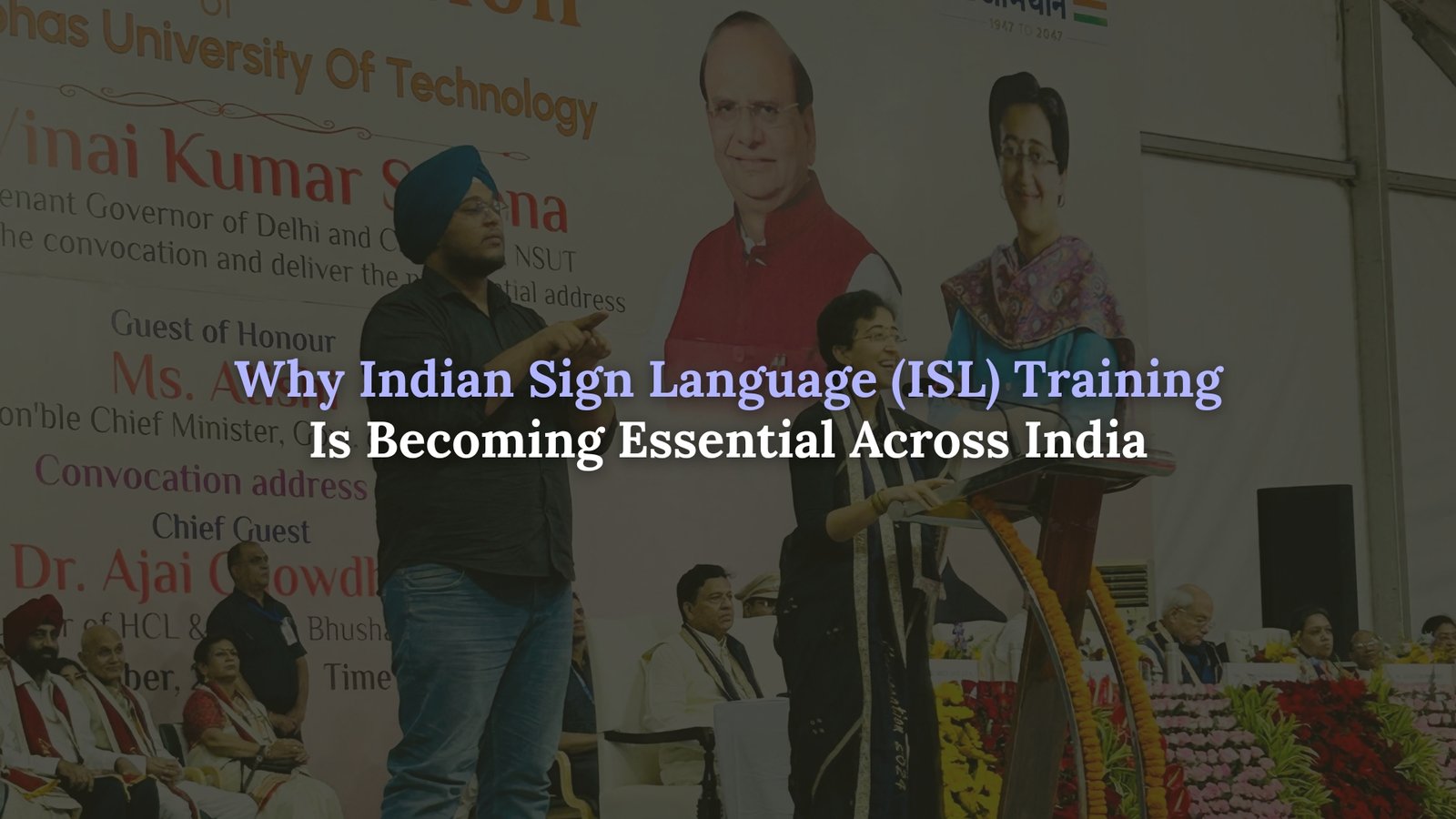
India is moving towards a more inclusive and accessible future. From workplaces and educational institutions to healthcare facilities and public services, organizations are recognizing the importance of ensuring equal communication opportunities for everyone. One of the most significant steps in this journey is the growing adoption of ISL workshops and training programs in India.
Indian Sign Language (ISL) is not just a communication tool—it is a language that empowers millions of Deaf and hard-of-hearing individuals to participate confidently in society. As awareness about accessibility continues to grow, learning ISL is becoming an essential skill for professionals, educators, businesses, and institutions alike.
Organizations such as Lexiversa are helping bridge communication gaps by providing professional Indian Sign Language interpretation, Deaf-led training, accessibility solutions, sensitization workshops, multilingual language services, and inclusive communication support across India. Their mission is to create barrier-free communication through accessibility-focused solutions for businesses, educational institutions, healthcare providers, events, and communities.
Understanding Indian Sign Language (ISL)
Indian Sign Language is the primary language used by the Deaf community across India. Like spoken languages, ISL has its own grammar, vocabulary, sentence structure, and expressions. It is a complete visual language rather than a collection of hand gestures.
Learning ISL enables hearing individuals to communicate effectively with Deaf people while promoting equal participation in education, employment, healthcare, and everyday life.
As India embraces accessibility and inclusion, ISL is becoming an important communication skill rather than a specialized qualification.
Why ISL Training Is Growing Across India
Several factors are driving the increasing demand for ISL workshops and training programs in India.
Growing Workplace Inclusion
Many organizations are actively building diverse and inclusive workplaces. Hiring Deaf professionals is becoming more common, but meaningful inclusion requires effective communication.
ISL training helps:
- Improve collaboration among teams
- Reduce communication barriers
- Build inclusive workplace cultures
- Enhance employee confidence
- Strengthen diversity and inclusion initiatives
Companies that invest in accessibility often experience improved employee engagement and stronger workplace relationships.
Educational Institutions Are Embracing Accessibility
Schools, colleges, and universities are recognizing the importance of accessible education.
Teachers, administrators, and support staff benefit from learning ISL because it helps them:
- Communicate directly with Deaf students
- Create inclusive classrooms
- Improve student participation
- Build stronger relationships with families
- Promote equal learning opportunities
Educational institutions across India are increasingly partnering with accessibility experts to conduct ISL awareness sessions and training programs.
Healthcare Professionals Need Better Communication
Communication is critical in healthcare.
Doctors, nurses, hospital administrators, and medical staff frequently encounter situations where effective communication directly impacts patient care.
Without sign language support, Deaf patients may struggle to explain symptoms, understand diagnoses, or follow treatment plans.
Professional ISL training helps healthcare teams provide:
- Better patient experiences
- Clear communication
- Improved medical outcomes
- Greater trust and confidence
- Equal healthcare access
Accessibility in healthcare is no longer optional—it is becoming an expectation.
Businesses Are Building Accessible Customer Experiences
Today’s customers value businesses that prioritize inclusion.
Banks, retail stores, hospitality businesses, airlines, customer service teams, and public-facing organizations are increasingly investing in ISL workshops and training programs in India to improve customer interactions.
Accessible communication helps organizations:
- Serve a wider audience
- Improve customer satisfaction
- Build brand reputation
- Demonstrate social responsibility
- Create welcoming environments
Small improvements in accessibility often make a significant difference for Deaf customers.
Government and Public Services Are Becoming More Inclusive
Accessibility initiatives across India continue to encourage equal participation in public life.
Public service departments, transportation authorities, legal institutions, and civic organizations increasingly recognize the need for communication support through Indian Sign Language.
Training staff in ISL improves service delivery while promoting equal access to information and public services.
The Role of Deaf-Led Training
One of the biggest advantages of professional ISL learning is exposure to Deaf culture.
Many leading organizations, including Lexiversa, conduct Deaf-led workshops where participants learn directly from experienced Deaf trainers and professional ISL interpreters. These programs go beyond vocabulary by helping participants understand communication etiquette, cultural awareness, and real-world interaction.
This practical learning approach creates more confident and respectful communication.
Benefits of ISL Workshops and Training Programs in India
Professional ISL training offers long-term value for both individuals and organizations.
Some major benefits include:
- Better communication skills
- Increased accessibility awareness
- Stronger workplace inclusion
- Improved customer experience
- Enhanced teamwork
- Greater confidence when interacting with Deaf individuals
- Support for diversity and inclusion goals
- Positive organizational culture
Whether someone works in education, healthcare, hospitality, government, corporate environments, or customer service, ISL skills create meaningful impact.
Why Organizations Choose Professional ISL Training
Effective ISL learning requires structured guidance from experienced professionals.
Lexiversa delivers customized ISL workshops and training programs in India designed for organizations, educational institutions, healthcare providers, corporate teams, conferences, webinars, and public events. Along with interpretation services, the organization also offers accessibility consulting, multilingual communication solutions, event accessibility, content translation, and awareness programs that help businesses create truly inclusive experiences.
Tailored training ensures participants receive practical knowledge relevant to their industry and communication needs.
Building an Inclusive Future
Accessibility is no longer viewed as an additional service—it is becoming a core part of responsible organizations.
Learning Indian Sign Language demonstrates empathy, respect, and commitment to equal opportunities.
As awareness continues to grow, ISL workshops and training programs in India will play a crucial role in building workplaces, classrooms, healthcare facilities, businesses, and public spaces where everyone can communicate with dignity.
Organizations that invest in accessibility today are helping create a more inclusive India for future generations.
Conclusion
Indian Sign Language is transforming the way people communicate across diverse sectors. From businesses and educational institutions to hospitals and public organizations, ISL training is creating stronger connections while breaking communication barriers.
Professional ISL workshops and training programs in India not only improve communication but also foster understanding, accessibility, and genuine inclusion. As India continues to embrace diversity, learning ISL has become an essential step toward creating environments where everyone feels heard, respected, and valued.
If your organization is committed to creating an inclusive workplace or accessible services, now is the perfect time to invest in professional ISL training. Explore Lexiversa’s accessibility solutions, connect with experienced ISL professionals, and discover how customized training programs can help your team build meaningful communication without barriers. Contact us today to learn more and take the first step toward a more inclusive future.